What's This All About?

Check out The ABC's of Insecurity and learn more.

What's so great about the Ivy League anyway?
Showing posts with label philosophy. Show all posts

Thursday, July 9, 2009

Keep Asking. Always.

"Philosophers are adults who persist in asking childish questions."

- Isaiah Berlin

Friday, June 12, 2009

The Sound of Silence

All men's miseries derive from not being able to sit in a quiet room alone. 
-Blaise Pascal.

Pure silence makes me uncomfortable. It just does. Not sure why. Maybe because I am a City girl and I was raised to a soundtrack of sirens. Maybe because when shrouded in silence, I have no choice but to think about things - even the things I'd rather not think about. To remember the things I toil to forget. To dream of the things that linger beyond reach. To worry about the things I can't seem to change. Maybe because when the world is utterly and immaculately silent, I can actually hear the ebb and flow of breath, the scurry of an anxious heartbeat, the melody of my own mortality. 

Whatever the reason, I've always been a fan of background noise. Music. Television. Conversation. Traffic. Fussing. Rain. Anything but the void. And maybe Mr. Pascal would say that my inability to sit in a quiet room alone is a true existential bummer of sorts, a sad and supple source of potential misery. And maybe Mr. Pascal would be right. Maybe he would. I'm sure he was right about many things. Good for him.

Anyway, this has admittedly been a very meandering path to my weekly update on the Happy Headache (a.k.a. the untimely-given-this-recession-gut-renovation of our new place), but, alas, I do have a point and I'm getting there and I was craving a little philosophical Friday afternoon stroll, so I thank you for indulging me. Anyway, I did not attend this morning's weekly construction meeting, but Husband did and he was kind enough to pass along the migraine-inducing minutes of said meeting. Bring on the bullet-points:
  • Structural Engineer has uncovered seemingly serious flaws in the foundation of our apartment, flaws regarding gravely important things like pillars and joists. Translation? Bye Bye Budget.
  • Addressing these things necessarily expands the good old scope of work. Translation? Add six too many weeks to that trusty time projection.
  • Our new place abuts a school. Our project manager says he can hear conversations going on in our lovely neighboring school through the wall of what will be Toddler's future bedroom. What does this mean? We must pay for an ACOUSTICIAN to come analyze the conditions. I am not making this stuff up. We pay someone to specializes in acoustics to come listen to the kids/campers chit chat through the wall and then tell us what we can do to fix it. Translation? RIP Budget.
So, it seems that everything - even the sound of silence - will cost us a pretty penny. And though I am doing everything in my power to pass along my sedatephobia (i.e. fear of silence, there's a word for it!) to my progeny (currently the girls fall asleep every night to the artificial rumblings of rain and the digital crash of ocean waves), I guess I should at least give them the chance to sit (or sleep) in that quiet room alone and decide for themselves. I imagine this would make Pascal proud.

How do you feel about silence? Do you crave it or avoid it like I do? Is this Pascalian malaise an urban or more universal human phenomenon?

Wednesday, May 27, 2009

If You're Happy and You Know It...


You would think I could get over the whole graduation thing.  Yes, it was a delightful weekend, but I am home now, swimming once more in a spit-up-seasoned sea of baby toys and diapers.  Miles from New Haven and college life and commencement.  But no.

Another thing that Yale Law dean Harold Koh said, other than eloquently encouraging us to be big trees in the forest of life?  He said (something like): Pursue happiness.  The right to happiness is an inalienable right. You can't sell it. Do not let anything -- the mortgage, the BMW payments, even children -- trap you in a job you don't like.

And, sitting there, anonymously, behind my obnoxiously vast Oliver Peoples shades, a Yale grad, a lawyer of latter day, a rookie writer, a young mom, a perpetually lost soul hungry for morsels of wisdom, I nodded.  Vigorously. 

Happiness. That's it. That's what matters in life.  

But mere moments later, I thought to myself: What is happiness? How can we pursue it if we don't know what it is?

And then, because I have quite the non-linear attention span, I flashed to one of Toddler's Free To Be Under 3 classes where the teacher always leads a riveting rendition of that classic song If You're Happy and You Know It.  Come on. You don't have to have kids to remember this one. If you're happy and you know it, clap your hands! (And then there are a bevy of other verses involving stomping feet and tapping heads and air kisses and shouts of hooray.) Anyway, the point is that all of us parents and kiddies sing along each week: If you're happy and you know it, clap your hands!  And, sure enough, all the tiny tots clap their tiny hands. They don't even have to think about it.  Imagine that.

And suddenly, I imagined a room full of adults and what they would do with these simple melodic instructions.  And something tells me a few people would probably clap proudly and a bit insistently.  And then a few would probably not clap.  And then a few of us (maybe most of us?) would clap softly or apathetically or uncertainly.  Because this is not an easy question, is it?  In fact, if we are being technical, it is two questions:

(1) Are you happy?

and 

(2) Do you know it?

Patently, each of these questions is a biggie and has kept philosophers and other thinkers and regular people like the rest of us baffled and busy for centuries.  But that doesn't mean we shouldn't ask these questions and try to answer them. But how many of us are brave enough to ask these deceptively simple, childhood questions?

One such brave soul? Fellow Yalie/lawyer/Manhattan mom/writer Gretchen Rubin. Rubin is currently at work on her book THE HAPPINESS PROJECT a memoir of the year she spent "test-driving" tips and theories of happiness from the pedestrian to the profound to the philosophical.  Not only did Rubin press pause on her fast-track life to explore the enigmatic and idiosyncratic concept of human happiness, but she generously documents her experience and findings on her intriguing and insightful daily blog.

So.  Are you happy.  And, if so, do you know it?

Not sure?  I'm right there with you.  But I encourage you to check out Rubin's blog because while soaking up her sage musings, it occurred to me in a mini light-bulb moment that this blog you are reading might be my very own (and very accidental) happiness project.  That hammering away on my keyboard, spewing bits silly and serious and somewhere in between, that fashioning a new sense of authenticity in my own little world, is in fact making me a happier person. Whatever that means.  So maybe blogging is what it will take to get me clapping loudly and proudly?

What will it take to get you clapping?  Because as much as we might want to endorse and live by Koh's astute advice to cling tight to our right to happiness, to pursue happiness full-force, we cannot pursue something we can't recognize, can we?

Wednesday, April 22, 2009

Dad

This is Dad.  He was known to the rest of the world as Strachan Donnelley and to his grandchildren as Potsie.  But to me, he will always be Dad. Not my Dad.  Not my father. Just Dad. Plain and simple.  Just like he was.  Kind of. Okay, not really.

Dad died (or as he would say turfed it) last July after fighting a valiant battle against stomach cancer.  He was the sun around which we Donnelley girls orbited.  Needless to say, this has been an impossible year for us.  But we are chugging along, living life, smiling and laughing and yes, crying.

Don't get used to this.  There will be very little on this blog about Dad, the most brilliant insecure Ivy Leaguer I've ever known.  Why?  Because Dad was suspicious of modern technology. He would hate that my forthcoming novel is now called BlackBerry Girl (when he read it, it was still called Finding Prudence) and he would cringe at the very thought of a blog. And Dad was intensely private about his life and his family.  But about his passions -- humans and nature -- he was unflinchingly public and proud.  

Today is Earth Day and my beloved alma mater Dalton is honoring Dad by naming the day, and today's Sustainability Day symposium, after Dad.  And perhaps as you are reading this, I will be standing on stage in the auditorium where I used to trumpet proudly.  My hands will be shaking as I speak into the microphone and try futilely to capture Dad. But everything I do say is fit to print right here.  And if you didn't know Dad -- and maybe even if you did -- my words will prove cryptic.  But if any of you other than my sisters spend the time reading them and you get a taste of who Dad was and what he was up to, then I have accomplished something.  And if you are intrigued (and you should be), you will visit the Center for Humans and Nature, and learn a bit more about Dad and the Center he founded all too recently, the only Donnelley baby he didn't get to see grow up.


Wednesday, April 22, 2009

The Dalton School

On behalf of all of us Donnelley girls – and boys – past, present, and hopefully future, I want to thank Dalton for honoring Dad, his love and his life, his work and his wildness, on this important day.  I am humbled to return here, to this school I loved, where I laughed and learned for so many good years.  And I am humbled to return to this stage where I spent a handful of evenings playing my trumpet in the orchestra.  And on those evenings, Mom and Dad would sit in the audience just as you are now.  And no matter how we sounded as we fumbled through the 1812 Overture, Dad would listen.  And clap.  And hug.

This was Dalton Dad.  He believed in this school enough to send us here, one after the other.  He applauded the diversity of the Dalton ecosystem, the music and the ideas that emerged from that priceless mixture of good teachers, and good students, passion, and big ideas.

And Dad was all about big ideas.  One of his many mantras was “Ideas matter.” He spent his life exploring what he called Louisville Slugger ideas. And, fittingly, one of his biggest, baddest, most profound ideas was that of Orchestral Causation, the concept that each of us here, in this auditorium and in this world, is part of something much bigger than ourselves. 

If Dad were here, he would urge us to, and these are his words: “Imagine a musical, orchestral performance, say Verdi’s Requiem.  What factors are at play?  There is Verdi, the composer; the musical score, the conductor; the orchestra and the chorus; the soloists; the members of the audience (each with different musical ears and personal concerns); the orchestral hall with its acoustics; the wider world in its present and cultural moment; and no doubt more.”

And Dad, the Metaphor Monger and Marginalist, would get riled up.  He would jingle the loose change in his pocket, and fiddle with his loyal Parker pen.  He would flip clumsily through yellow legal pad pages full of his illegible and brilliant scribble.  And he would look out at us and probably call us rookies, which would be both true and a true compliment.  And he would shake that fatherly and philosophical finger as he began a riff that would confuse and enlighten and inspire, “We humans still consider ourselves at the center of all things significant and meaningful, right in the middle of the frog pond… [and] there is a problem at the center of the frog pond, that small section of the natural orchestra which refuses artfully and harmoniously to blend in with the others, risking discordant cacophony in following its own tune…”  His blue eyes fierce and his mustache dancing, he would deliver his final exhortation, “The grand symphony of life and its future is being seriously marred and degraded.  If we humans do not tune in, the pond might become frogless, humanless, soundless.”

But it wouldn’t be final and he wouldn’t stop there.  No, he would continue. He would call in reinforcements, his philosopher friends – Heraclitus and Leopold and Mayr and Darwin of course.  He would remind us that we are complex organisms, part of ever-evolving and delicate biotic communities, of Nature Alive.  That we should be plain citizens of the land and not its conquerors.

And he would tell stories, wonderful stories. About mayflies and Mother Nature and mountain rainbows.  About prairie ball fields and pintails.  About wild turkeys and Old Gobblers.  He would tell you just why Kansas was on his mind. 

And in the end, you would be left a bit dizzy, delightfully disoriented and certainly invigorated.  And you would wonder what had just happened.

And I am Dad’s daughter, so I will not stop here. I will tell you what just happened.  I will do something that Dad would never do: I will offer a translation, a more earthly version of his lofty musings.  I will boil it down for you.  Here’s the deal. 

What we do matters.  Who we become matters. We must think big thoughts and lead rich lives. Lives beyond the beckoning bottom line.  We are not just Daltonians, destined for greatness, but organisms destined for danger -- if we don’t get our act together, if we don’t adjust our moral compasses.  We are part of something bigger, far bigger, and far better than just ourselves.  Bigger and better than grades and graduations and Ivy League Schools and Wall Street stocks and high wattage careers. 

Beyond the seats of this darkened auditorium, and the classrooms of this fine school, and the concrete of this great city, there is an Earth, a natural world, that houses and humbles us all.  A world that is full of intrinsic and limitless worth and wonder.  Worth and wonder that it is our sacred duty to recognize and revere.  To celebrate and sustain.

What I wouldn't give to be sitting out there where you are.  In the audience. Listening to Dad fumble profoundly through his Ignoramus Overture like I once did mine.  But, alas, here I am living and honoring the most inconvenient truth of them all: that Dad, my fly-fishing philosopher Dad, is not up here and I am not down there.  But as Dad would say, “No matter.”  And as Heraclitus would say “The way up is the way down.” 

This Earth was a better place with Dad on it.  And now he is gone.  But his wise words and big ideas will live forever in the walls of this school and the winds of this world and the worlds of his Donnelley women.  His lunchpail legacy lingers in the continued work of cherished colleagues, in the laughter of loyal friends, and in the bottomless blue eyes of my baby girls.

Let’s take care of this Earth, its fundamental goodness and fierce wildness.  An Earth Dad loved madly and unconditionally.  And almost as deeply as a sixth Dalton daughter.

Monday, April 20, 2009

The Grass Is Greener

Knowing trees, I understand the meaning of patience. Knowing grass, I can appreciate persistence.”  Hal Borland

You know what?  The grass is greener.  In bucolic Wayne, Pennsylvania, that is.  Frankly, the grass is greener almost anywhere.  Because most grass is greener than no grass.  Because I live in a place, a wonderful place, that boasts very little of the green stuff.  

Sure, we have Central Park and I love the Park.  The fam and I have had many magical moments at Turtle Pond.  But the truth is there is a paucity of nature here in this lovely concrete jungle.  Does this matter?  According to Yale professor of psychology Paul Bloom, the answer is a resounding YES.  To kick off Earth Week, the New York Times included Bloom's fascinating article Natural Happiness in yesterday's Magazine.  In this article, Bloom proffers an admittedly self-centered argument for why we should care about nature; it makes us happier and healthier creatures.  He endorses Harvard biologist E. O. Wilson's well-known “biophilia” hypothesis, namely that "our evolutionary history has blessed us with an innate affinity for living things. We thrive in the presence of nature and suffer in its absence."

For me, this raises two immediate questions: (1) Is Bloom right?; and (2) Is this argument patent evidence of our human-centered thought?  

I do think Bloom is onto something.  Something big.  Something fundamental.  I spent the weekend amidst grass and flowers and trees and you know what? It was a good weekend. A happy one.  The girls were all smiles.  And, yes, I'm sure this had a lot to do with my In-Laws, the incomparable Grammy and Dad-Dad, and the tasty home-cooked meals, etc., but I do think the fact that we were outside for much of the time, tasting nature (not wilderness, but nature nonetheless) had a lot to do with it.  On Saturday, we visited Chanticleer Garden, the former estate of the Rosengartens, a big pharmaceutical-family which has been open to the public since 1993.  We spent the morning meandering through this utopia of flowers and foliage and fountains, and then enjoyed a yummy picnic of sandwiches from the local farmer's market.  It is not a coincidence that this oasis is called "a pleasure garden."

As much as Bloom and Wilson and the biophilia hypothesis might be true, is this argument another indicator of misguided, human-centered thinking?  Perhaps.  After all, this is Earth week and not Human Happiness week and we should care about the earth and work to protect it because it is intrinsically valuable not because it enhances our happiness quotient.  Now, all of this might be true, but if our bottom line is to preserve nature then we should collect all of the reasons, even if they are rooted in self-centered soil.  As Bloom says, "Look at it from the coldblooded standpoint of the enhancement of the happiness of our everyday lives. Real natural habitats provide significant sources of pleasure for modern humans. We intuitively grasp this, and this knowledge underlies the anxiety that we feel about nature’s loss. It might be that one day we will be able to replace the experience of nature with “Star Trek” holodecks and robotic animals. But until then, this basic fact about human pleasure is an excellent argument for keeping the real thing."

Practically speaking, what does this mean for us city-slickers?  For us Manhattan moms?  Bloom refers to author Richard Louv's disconcerting argument that modern children suffer from "nature-deficit disorder" because they have been disconnected from the myriad physical and psychic benefits that result from organic contact with nature.  Great. Just another disorder to worry about.  But, seriously, what can we do about all this?  

I'm not so sure.  But suddenly, I am very thankful for the blossoming Magnolia outside our brownstone window, for the Park in our backyard, for the pesky pigeons Toddler chases on the sidewalks, for Grammy and Dad-Dad's open arms and green grass mere hours away.

Sunday, April 19, 2009

Vancouver Veritas

Tummy trembles. Brain fuzz. That discombobulating feeling that you're not quite sure what you should be doing but you should be [doing] something to keep your act together. Anxiety. Sometimes it slips away with a few deep breaths, other times you need to beat it off with a stick or some little white pills. Naturally, we want try to get as far away from anxiety as possible - which usually just results in us being anxious about being anxious. You resist and so it persists. But what if rather than pushing it away, we actually welcomed anxiety when it showed up? What if, rather than dreading the discomfort it brings, we looked at anxiety as a delivery service of inner truth and other such soul goodies? Because every time anxiety shows up, it's our psyche's way of saying, "Knock knock, I've got something to show you about yourself that you really should see."

Danish philosopher Soren Kierkegaard explained anxiety is a natural condition. (How liberating!) He believed that anxiety is "a cognitive emotion that reveals truths that we would prefer to hide but that we need for our greater health." And that it's a valuable to for shaping our ideal lives. Think of it this way, beneath the butterflies in your stomach, behind the clouds in your mind – is your greater truth, and it's trying to break on through.

No, these are not my words. (Hence, the lovely purple italicized font). These are the insights of deep-thinking and fiesty Danielle LaPorte, a former think-tank exec, writer, and entrepreneurial consultant.  LaPorte, a self-proclaimed "spiritual mutt" and current Vancouver resident, has a stunning and soul-stinging website called White Hot Truth that you should check out right now.  On this site, she explores subjects that affect us all: anger, anxiety, discouragement, self-realization, truth.  Sound a bit new-agey? Perhaps.  But her (often humorous) words are an addictive mixture of profound and practical.  To see the entirety of her post Your Friend, Anxiety quoted above click here

Some cool things about Danielle:

  • She was executive director of The Arlington Institute, a Washington, DC-based think tank for future studies where she managed futurists (she worked with The Navy, The World Bank and IBM) (No, I'm not sure exactly what a futurist, but it sounds both very intriguing and very important, no?)
  • She did not go to college.  So much for needing that elite education to be a success in life.
  • She has dreadlocks for no particular reason. (She just likes big hair and dreads make her feel Goddess-y.)
  • She is a mom and has a white hot (and uber-creative) career.
  • She thinks that anxiety is not something to run from (okay, from which to run).  Rather, it should be acknowledged, harvested, explored, and utilized.  And that is basically the premise of this newborn baby Ivy League Insecurities! (can a baby have a premise? Hmmm.)
Okay, that's it for now.  Check back soon for musings about green grass and urban isolation and April being the cruelest month (all inspired by a picturesque weekend in the 'burbs).

Happy Sunday!

Friday, April 10, 2009

The ABC's of Insecurity

So.  Here goes.  My very first post as a rookie blogger.  And this post, like life, is one part serious and one part silly...
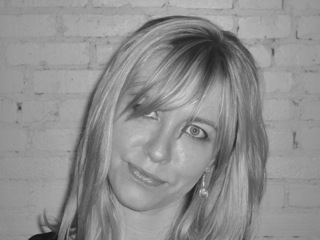
We humans are insecure creatures.  To pretend otherwise is foolish.  And yet that is exactly what we do.  Everyday.  We pretend that we have it all together.  We wake up and get dressed and go outside and smile.  What lingers behind those well-practiced smiles? The ABC's of insecurity.  


Anxiety.  About everything. Including being anxious. "Anxiety is the dizziness of freedom." Soren Kierkegaard

Boredom.  Admit it: if you weren't a bit bored, you wouldn't be reading this now. "Boredom: the desire for desires." Tolstoy
 
Control.  The one thing none of us has. "If everything seems under your control, you're just not going fast enough." Mario Andretti

Doubt. We make decisions.  And then we doubt them. "I doubt, therefore I think. I think therefore I am."  Descartes

Expectations. Great Ones.  Good book and story of our lives. "High expectations are the key to everything." Sam Walton.

Fear.  Of terrorism.  Failure.  Disease.  Death.  Infidelity. Mediocrity. Of being fat. "Always do what you are afraid to do." Emerson

Grief. Over losing a parent.  Or a spouse.  Or a child.  Or a friend.  Or a pet.  Or a job.  Or ourselves. "Given a choice between grief an nothing, I'd choose grief." Faulkner

Health. Vaginal or C-section?  To vaccinate or not to vaccinate?  Breast or bottle? Implants or let 'em hang?  "It is health that is real wealth, not pieces of gold and silver." Gandhi

Indecision.  About everything.  I can't even decide what things to mention. "Indecision may or may not be my problem." Jimmy Buffett

Jealousy.  Of other people's lives and jobs and husbands and apartments and nannies and diaper bags and blogs.  "To cure jealousy is to see it for what it is, a dissatisfaction with self." Joan Didion

Knowledge. I don't care where you went to college, how big your salary is, how smart you are.  About the most important things in life, we are all ignorant.  "Real knowledge is to know the extent of one's ignorance." Confucius

Loneliness.  How is it that we can't find five minutes for ourselves and yet we still have moments where we feel utterly alone? "Loneliness adds beauty to life.  It puts a special burn on sunsets and makes night air smell better." Henry Rollins.

Mortality.  We grow up.  And children are born.  And parents die.  And we can't help but contemplate our own exit. "If I am killed, I can die but once; but to live in constant dread of it is to die over and over again." Abraham Lincoln

Negativity.  Another thing I'm positive we all experience.  "All negativity is an illusion created by the limited mind to protect and defend itself." Ambika Wauters

Obligation. To our family.  To our friends.  To our society.  To our favorite Idol contestant. To ourselves.  "Remember always that you not only have the right to be an individual, you have an obligation to be one." Eleanor Roosevelt

Pessimism. I have been experimenting with a new drug: optimism.  I don't think it is working very well.  "A pessimist is one who makes difficulties of his opportunities and an optimist is one who makes opportunities of his difficulties."  Harry Truman

Questions.  The one thing each of us has in abundance.  "Judge a person by their questions, rather than their answers." Voltaire

Regrets. Tell me you have no regrets and I will call you a liar. "For the majority of us, the past is a regret, the future an experiment." Mark Twain

Self.  The biggest, baddest roadblock of them all.  "Self is the only prison that can ever bind the soul." Henry Van Dyke

Time. No, there aren't enough hours in the day, but there are twenty-four.  Make the most of them and stop bitching.  "Time is free, but it's priceless.  You can't own it, but you can use it.  You can't keep it, but you can spend it. Once you've lost it you can never get it back." Harvey MacKay

Uncertainty. Certainty is a myth, a silly old fairy tale we want desperately to believe.  "Uncertainty is the only certainty there is, and knowing how to live with insecurity is the only security." John Allen Paulos

Voice. We tell our tots to "use their words," but how often do we insist on using ours? "There is a voice inside of you/ that whispers all day long,/"I feel that this is right for me,/I know that this is wrong."/No teacher, preacher, parent friend/or wise man can decide/What's right for you -- Just listen to/the voice that speaks inside." Shel Silverstein

Worry. All of us worry. Period. "Worrying is like a rocking chair -- it gives you something to do but it doesn't get you anywhere."  Erma Bombeck

Xanax. I have absolutely nothing against prescription drugs.  Plenty of people I know swear by 'em. "At what point should I try Xanax?" Aidan Donnelley Rowley

Youth. Some of us don't have much interest in growing up.  For example, those of us who are thirty and, let's say, don't have a driver's license. So what if we want to stay kids even when we have kids?  So what if we want to pretend that we are still in college and yet are open to the idea of Botox? "You're never too old to become younger." Mae West

Zoloft.  Let me repeat for the record: I have nothing against prescription drugs.  Again, plenty of people I know swear by 'em.  Rumor has it it helps with insecurities A-Y. "Is Zoloft better than Xanax?  If so, where can I get me some?" Aidan Donnelley Rowley

Twitter Updates

    follow me on Twitter